Building Smarter: How Thoughtful Design Supports Better Construction
At Rueden Group, we see homes not just as beautiful spaces to live in, but as projects that work best when design and construction are closely connected. For many homeowners, the architectural process can feel like a simple handoff: design first, build later. In practice, a project’s timeline, cost, and quality all depend on how well those two stages are coordinated.
That’s why we use what we call the “Foreman on Paper” philosophy. It’s an approach to design that considers construction from the very beginning, making sure drawings aren’t just conceptual, but practical guides for builders.
What Is the “Foreman on Paper” Philosophy?
While many architectural drawings meet permitting requirements, they don’t always address the real questions and challenges that arise during construction. Our approach anticipates these issues, creating plans that act as both a roadmap and a record of design intent.
The goal is to think through how trades will interact, how materials will come together, and how a project moves from one phase to the next. Considerations like structural flow, site conditions, and installation logistics are built into the design, helping reduce confusion during construction.
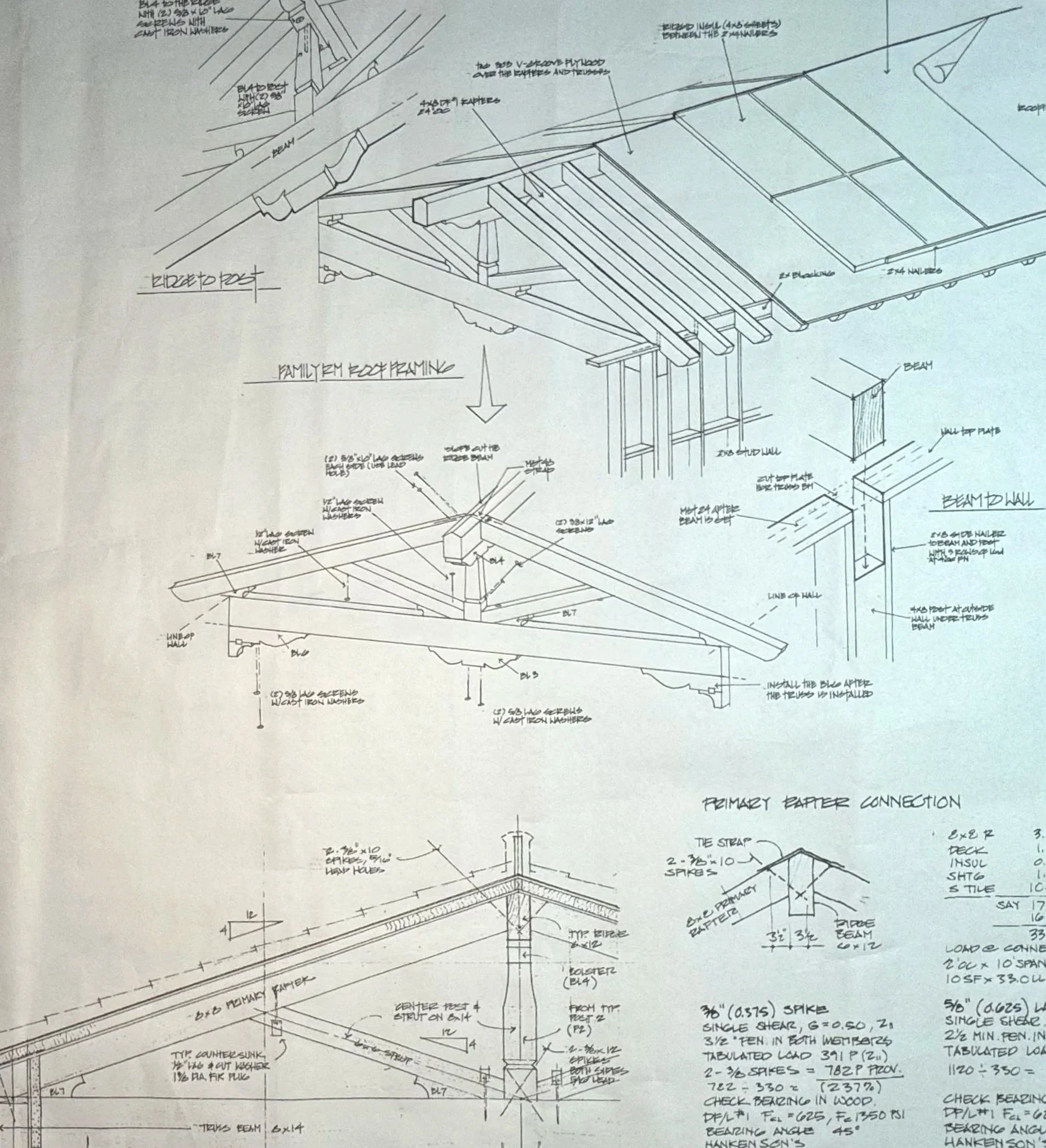
Thoughtful details communicate design intent, giving builders the clarity to execute with confidence and precision.
How This Supports a Better Building Process
Faster, More Predictable Timelines
Construction often slows when builders have unanswered questions. By addressing common issues in the drawings, fewer clarifications are needed, and the project moves more smoothly.
Cost Control and Fewer Surprises
Unclear plans can lead to changes during construction, which often increase costs. Clear, detailed drawings help minimize these uncertainties, supporting more accurate budgeting.
Clear, Comparable Bids
When contractors bid on a project, the quality of the drawings affects how easily they can provide accurate estimates. Detailed plans allow for more consistent, accurate bids, making it easier to understand costs across multiple contractors.Higher Quality Craftsmanship
Builders can deliver better results when they understand the reasoning behind each design decision. Detailed, practical plans give them the clarity to execute work accurately the first time.Smoother Communication
Having a shared understanding between design and construction teams helps reduce miscommunication and keeps everyone on the same page.
Thinking Ahead Makes a Difference
The “Foreman on Paper” philosophy is about connecting design and construction in a way that makes projects more predictable, efficient, and clear. It’s a way of thinking about homes not just as visions, but as built spaces that work well in the real world.