
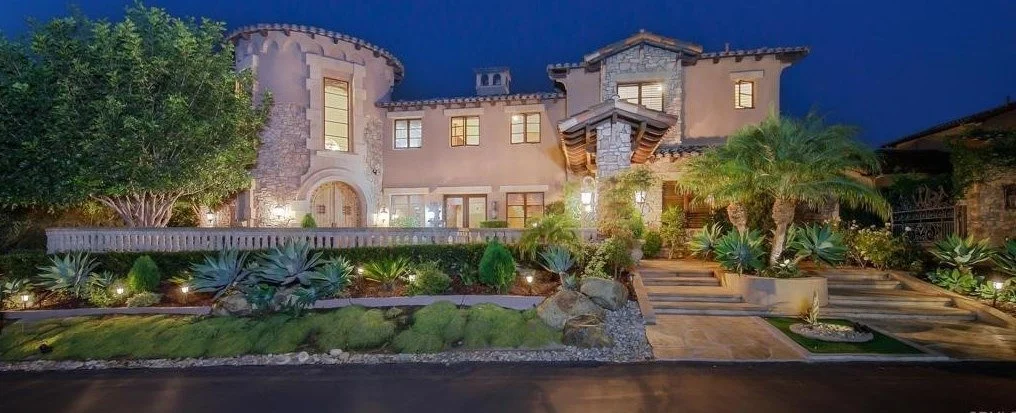
Torre In Pietra
Client Brief
The clients purchased a prominent corner lot within an exclusive golf club community in Southern California. They envisioned a home that would reflect their success while remaining comfortable, welcoming, and deeply connected to family life.
A key requirement was creating living accommodations for the wife’s mother. The suite needed to provide independence and privacy while maintaining a close connection to the daily activities of the household.
The family also enjoyed entertaining and wanted a home capable of hosting large gatherings while still feeling intimate and comfortable when occupied by only immediate family members. Above all, they desired a residence that conveyed quiet confidence and permanence rather than flashy displays of wealth.
Architecturally, the clients were drawn to the warmth, character, and timeless appeal of Tuscan-inspired design.
Site Challenges
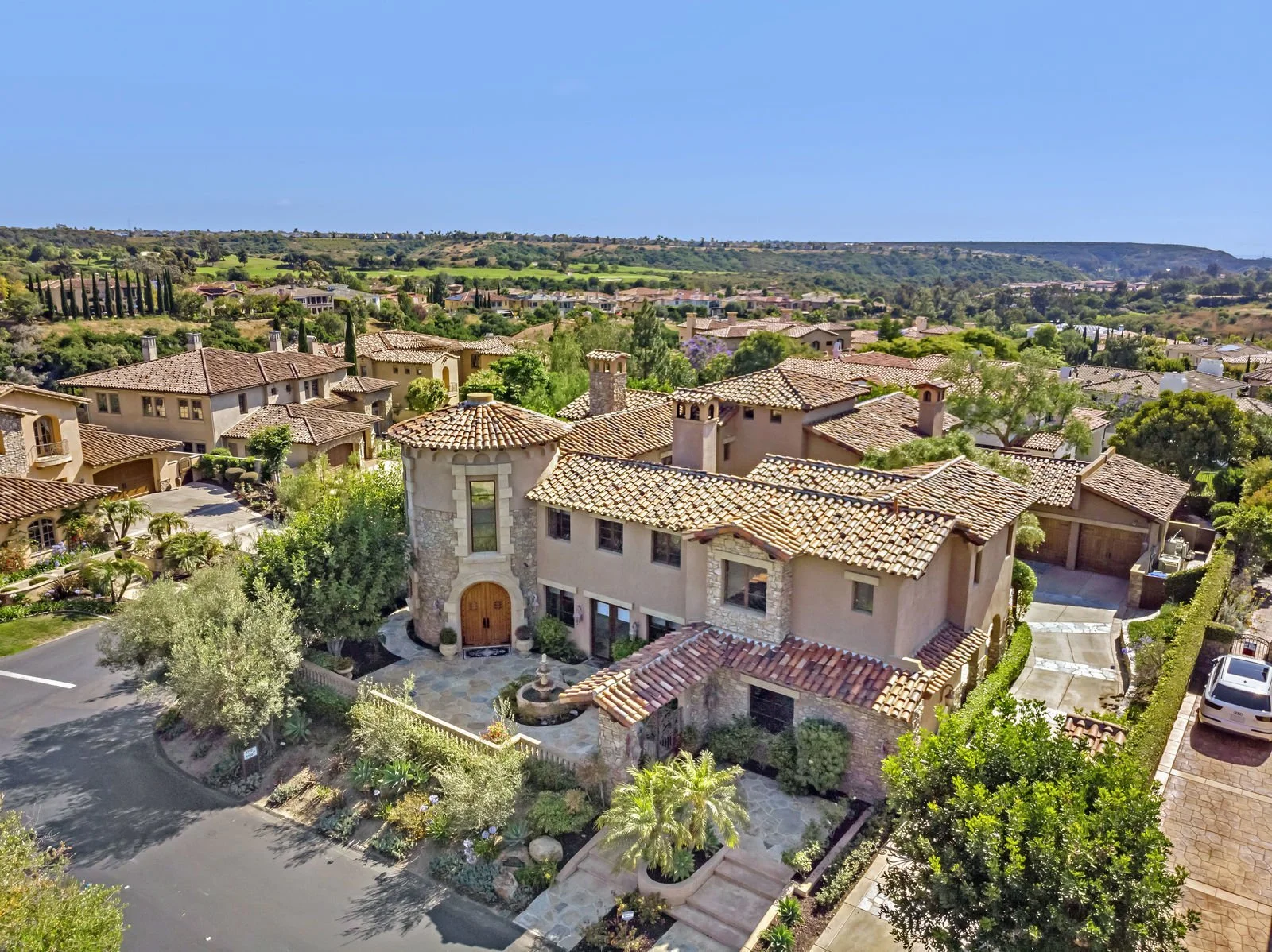
The property occupied a highly visible corner lot within the community. While the building pad itself was relatively level, the surrounding streets created unique visual conditions.
Along the primary frontage, visitors could see the entire site from a relatively level perspective. However, as the road turned the corner and descended rapidly, the viewing angle changed dramatically. Portions of the property that were visible from one direction disappeared from view in another, creating a constantly shifting relationship between the house and the street.
The site’s prominence offered prestige but also presented challenges regarding privacy, outdoor living, and the creation of a meaningful sense of arrival.
The design needed to establish a strong architectural presence while protecting the family from neighboring homes, passing vehicles, and the visual exposure often associated with corner lots.
Design Response
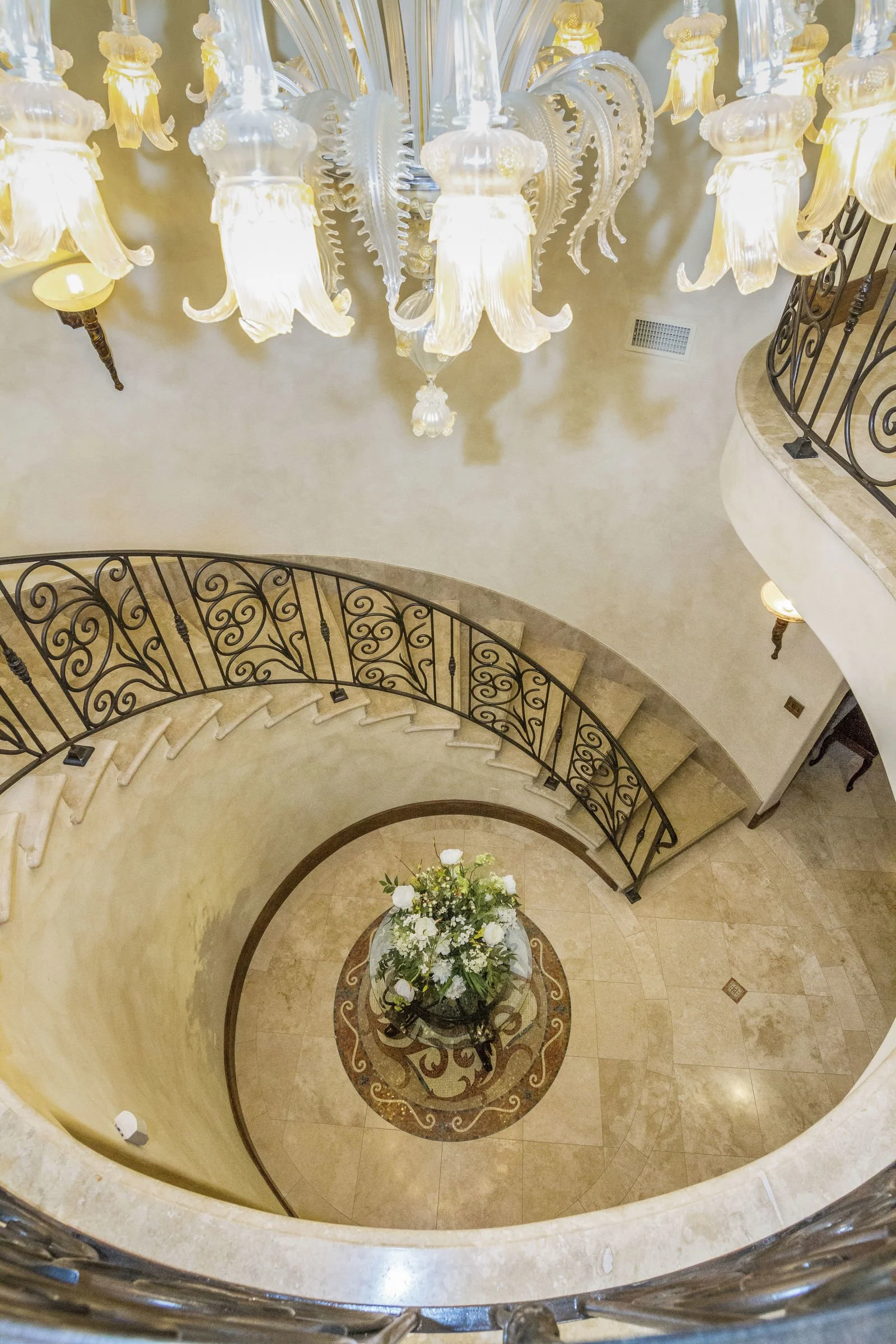
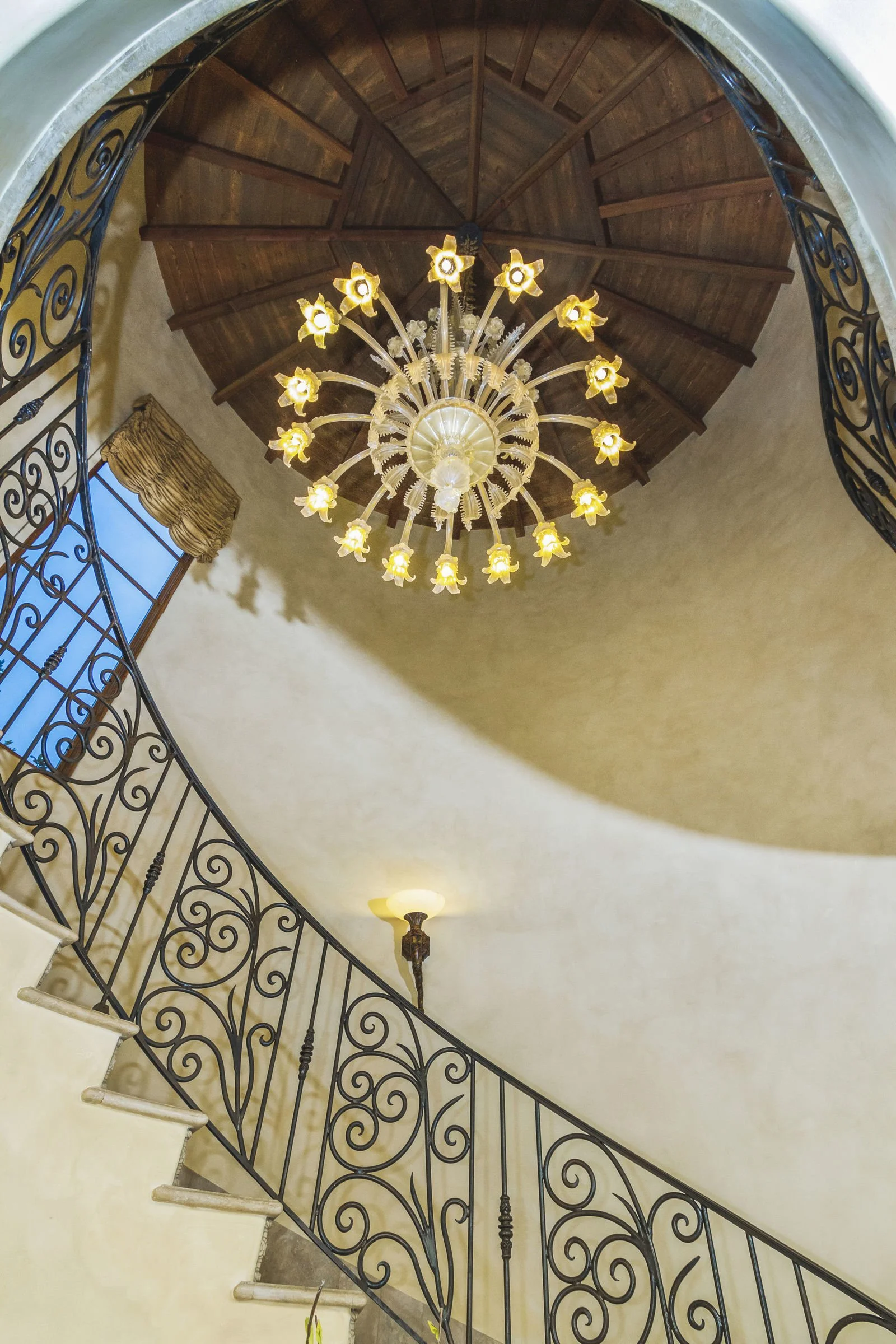
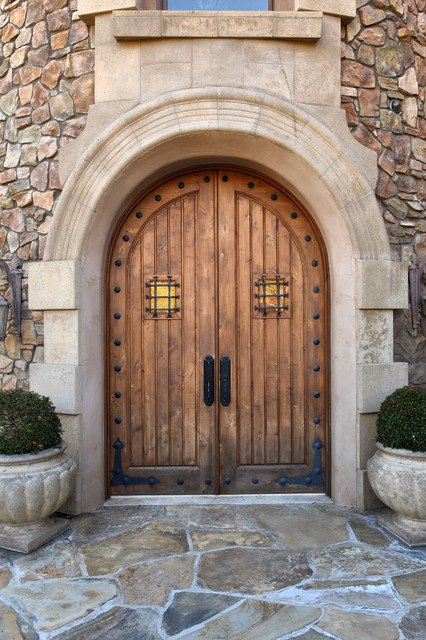
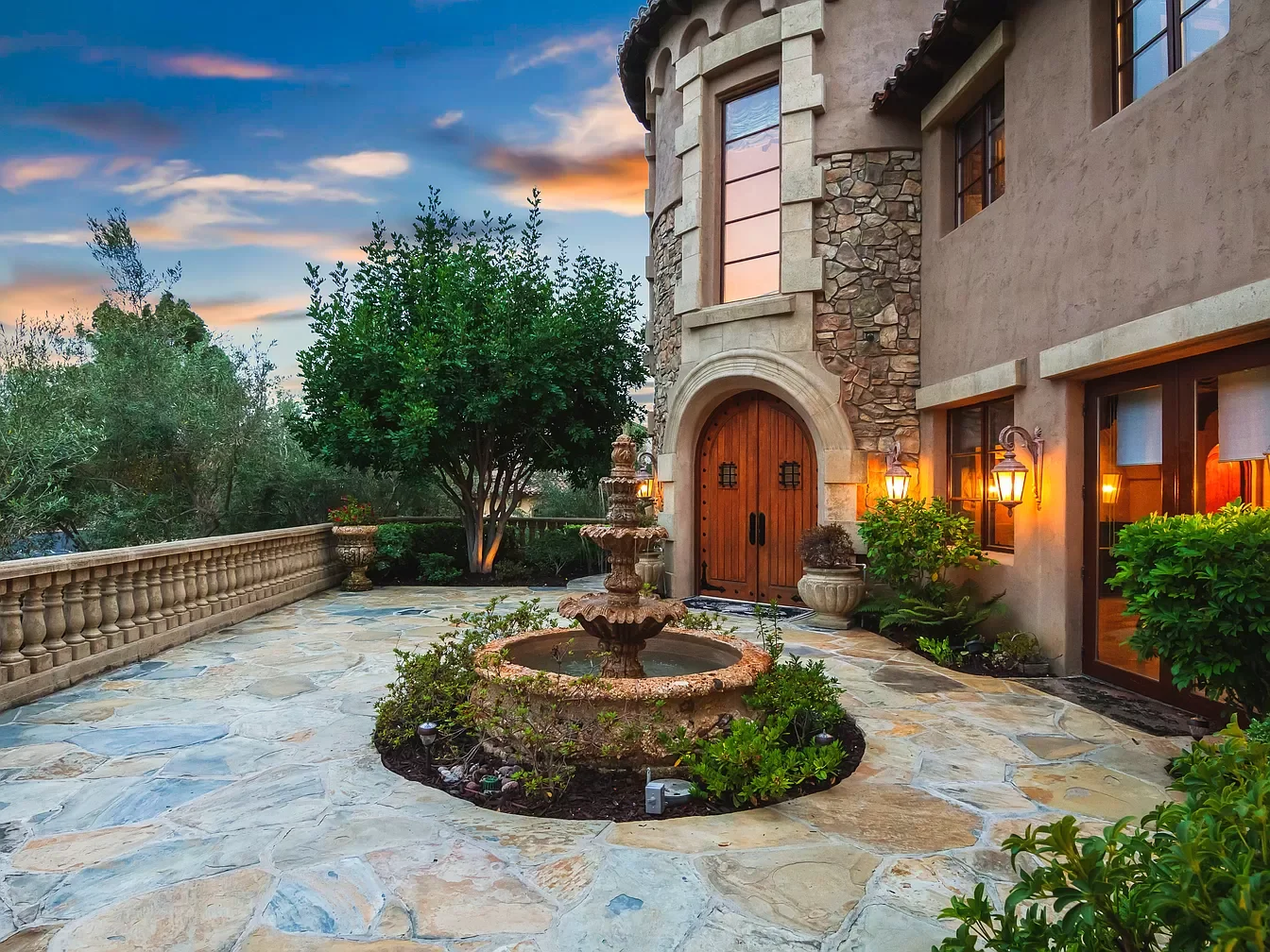
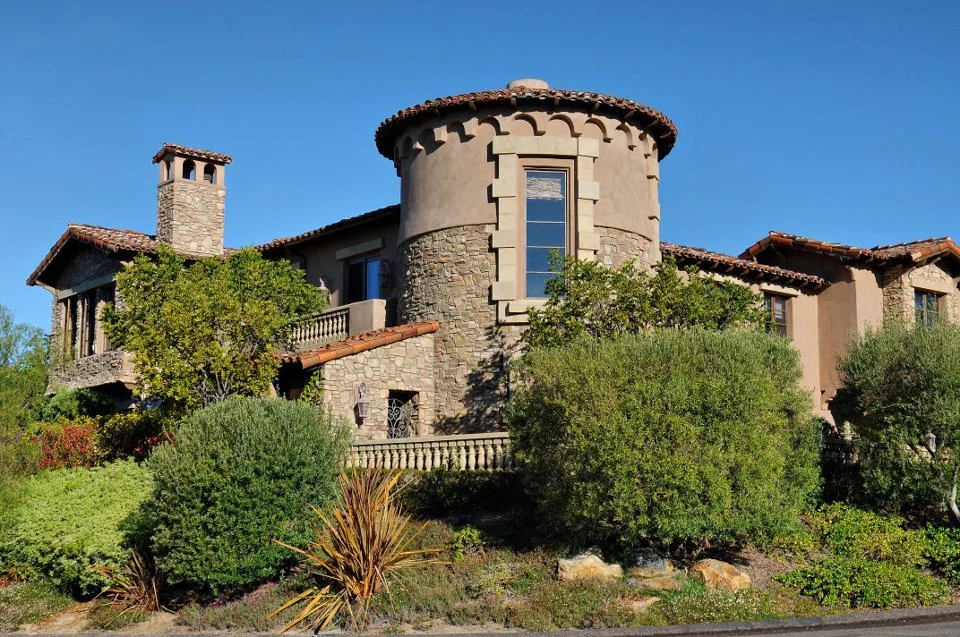
The design begins with a stair tower positioned at the corner where the two streets intersect. Inspired by traditional Tuscan precedents, the tower establishes a strong visual anchor and creates an unmistakable identity for the property. It transforms what could have been an awkward corner condition into a defining architectural feature.
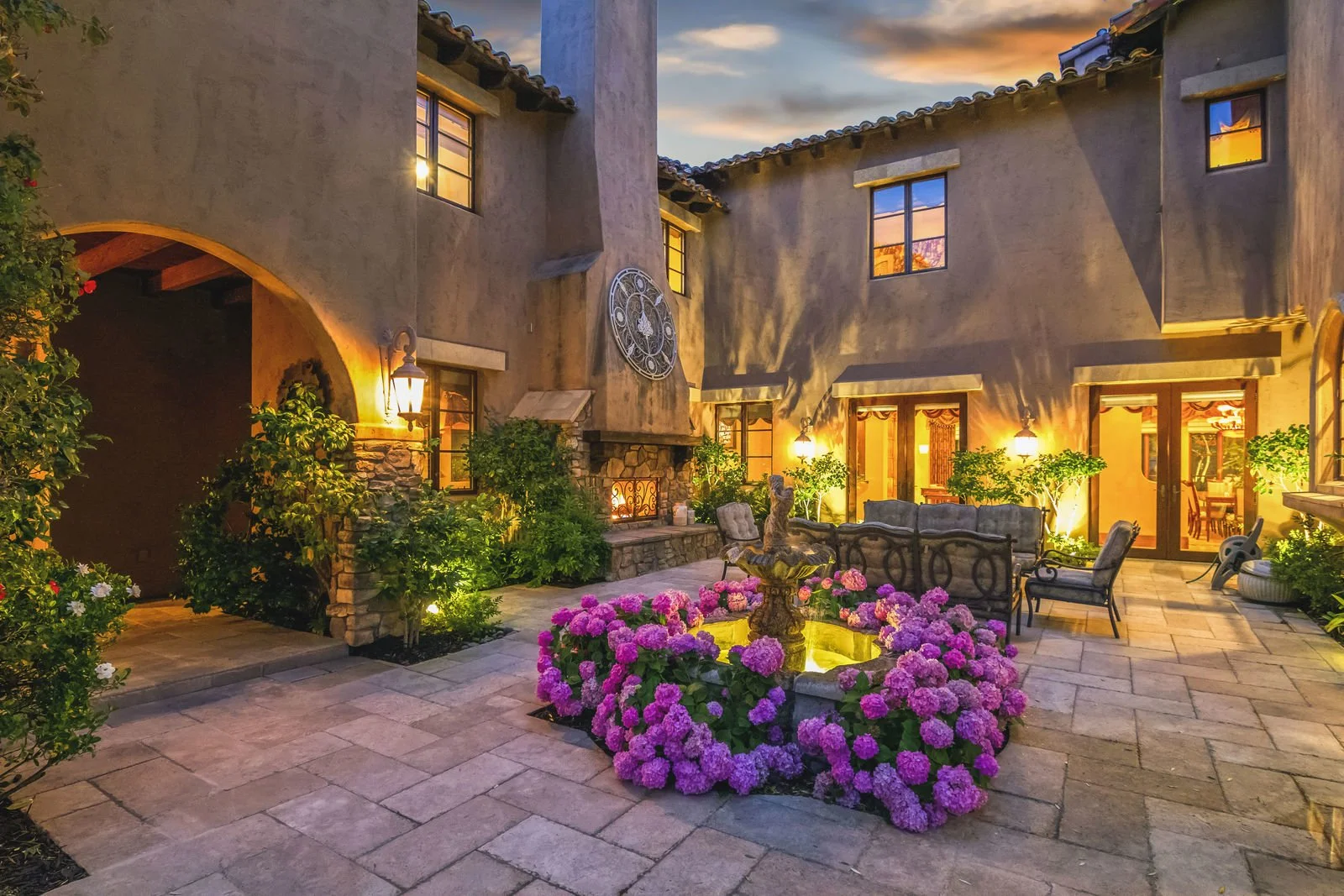
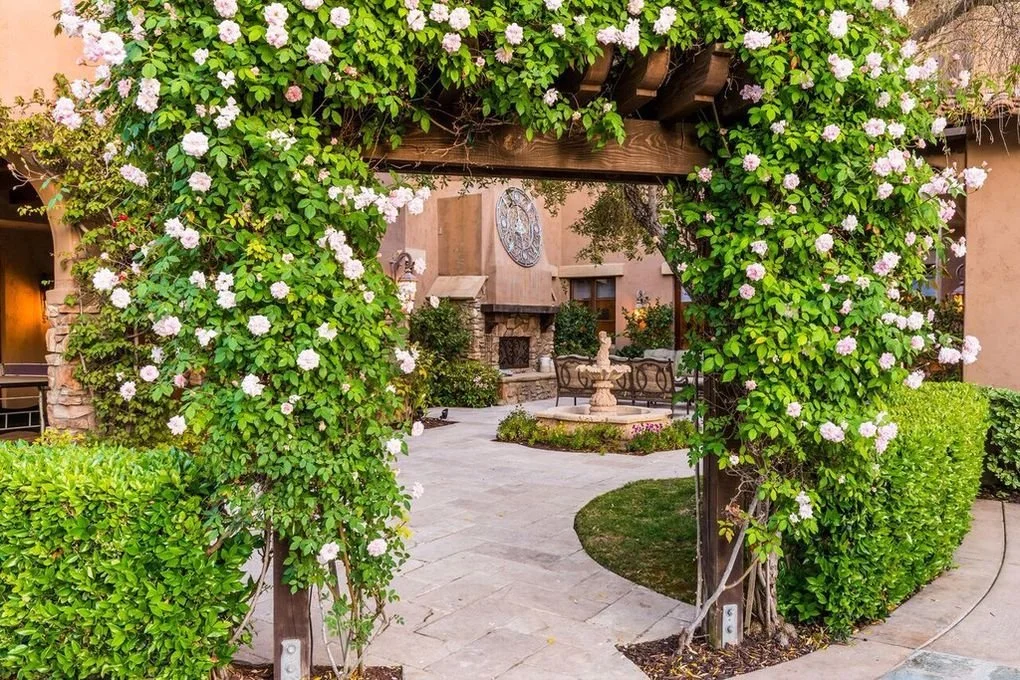
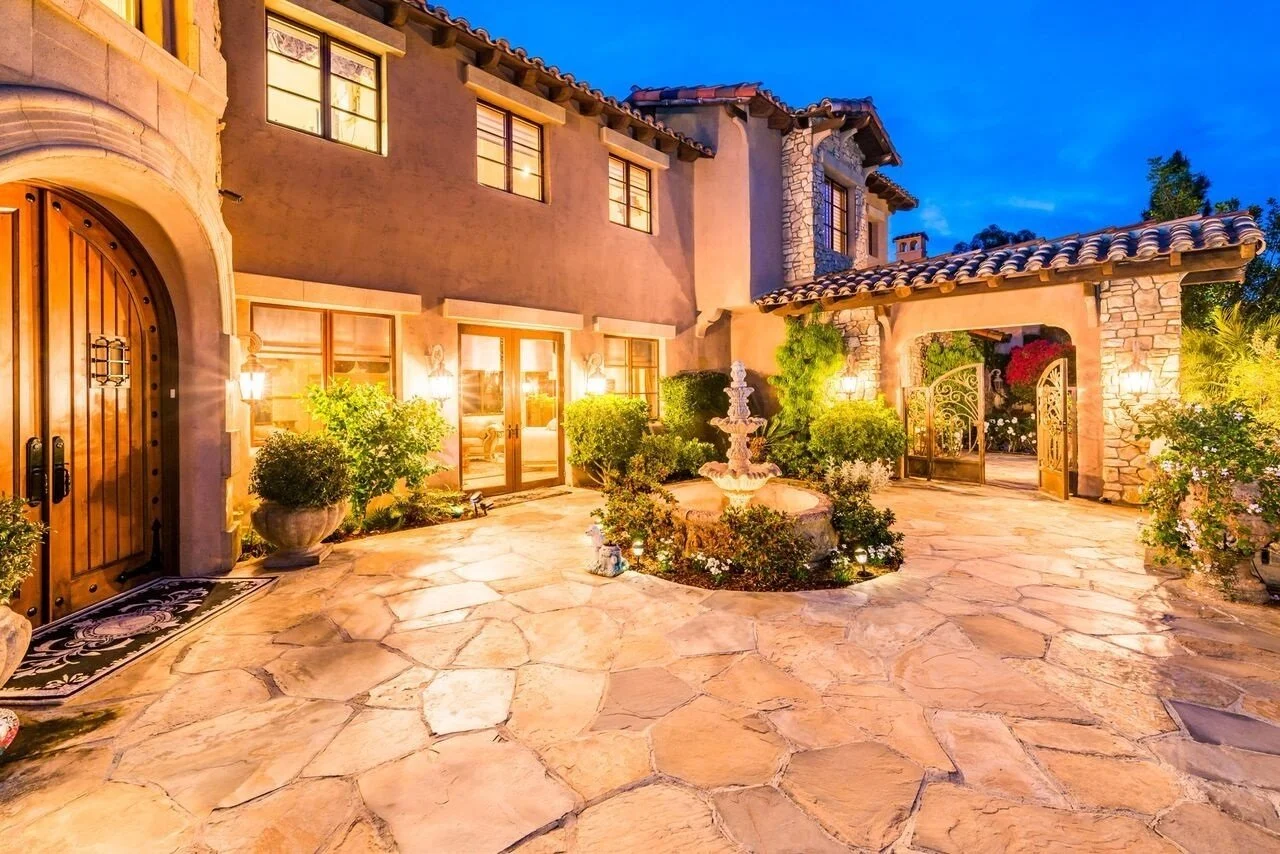
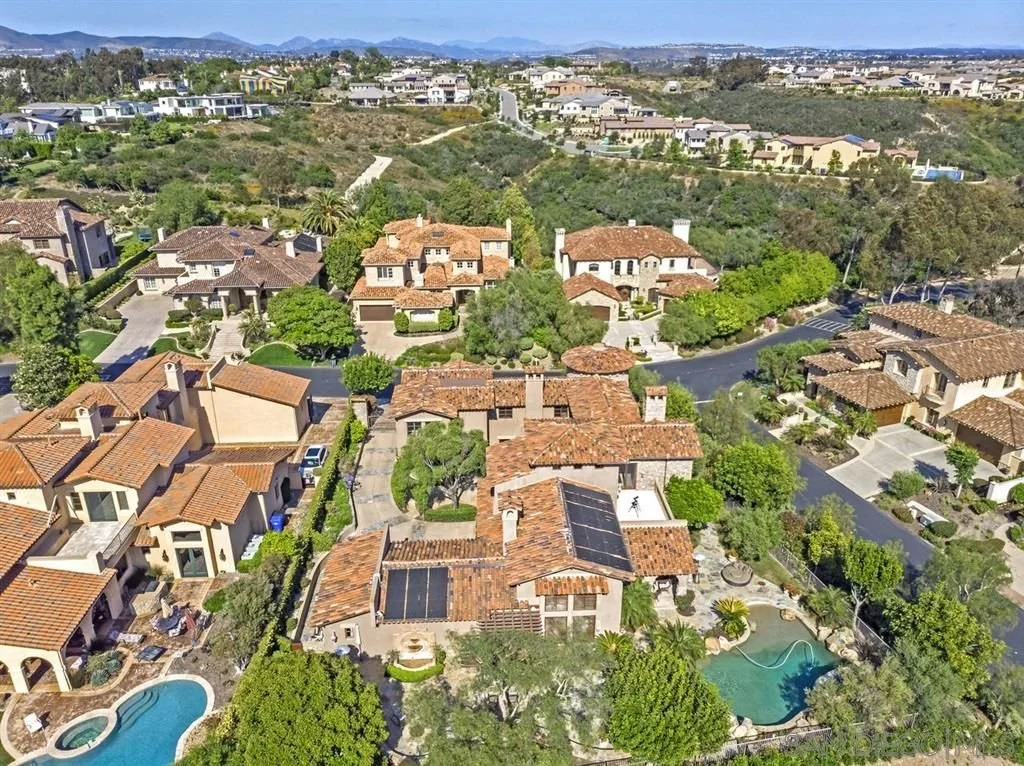
Beyond the tower, the home is organized around a series of interconnected courtyards. These outdoor rooms become the framework through which privacy, family life, and entertaining are orchestrated.
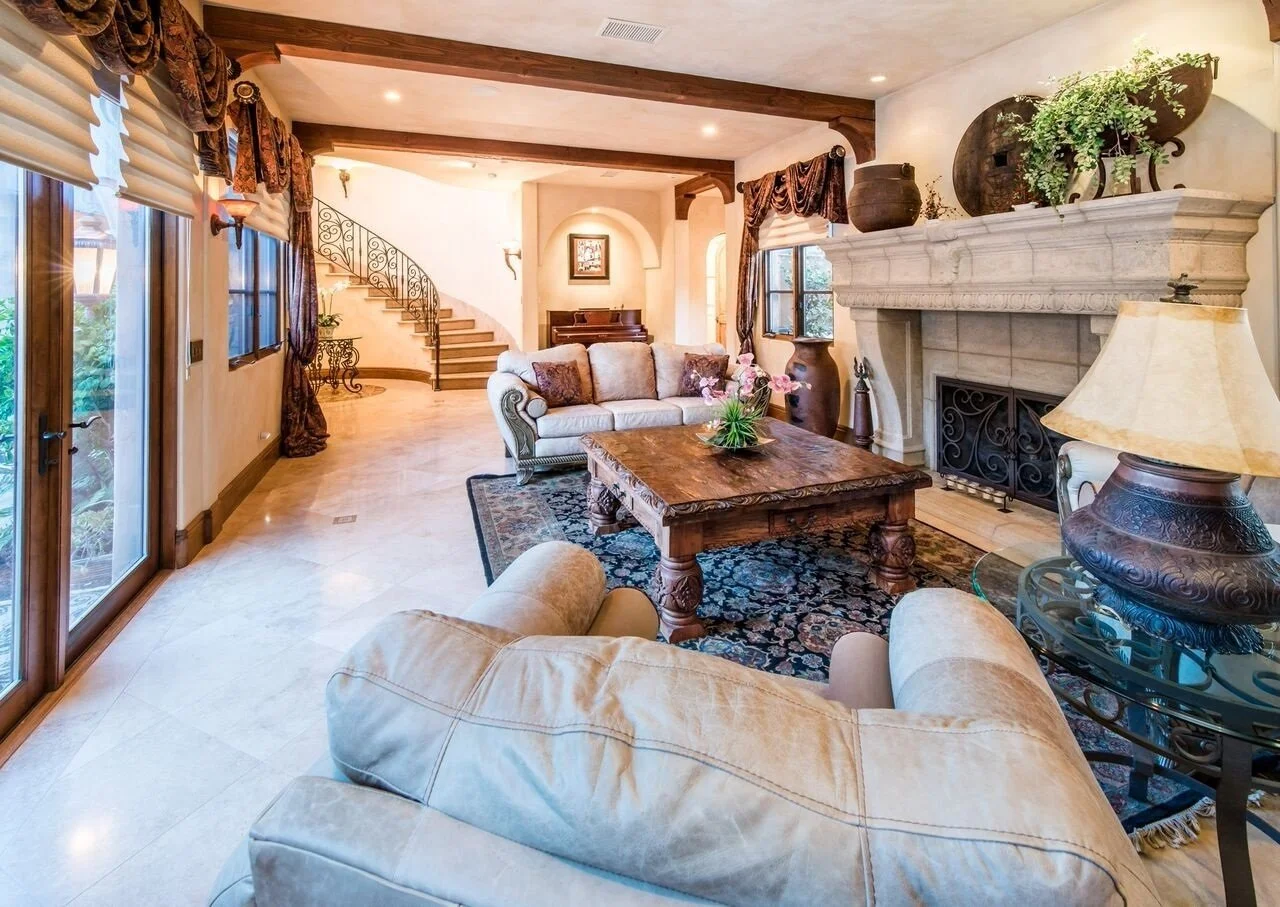
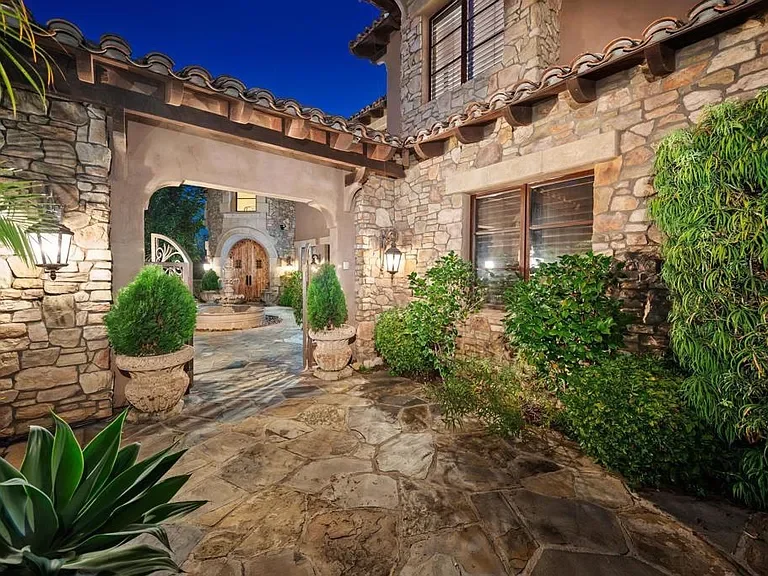
Visitors arrive through an entry courtyard framed by the living room and the mother-in-law suite. This arrangement allows the suite to maintain a sense of independence while remaining integrated into the daily rhythms of the household.
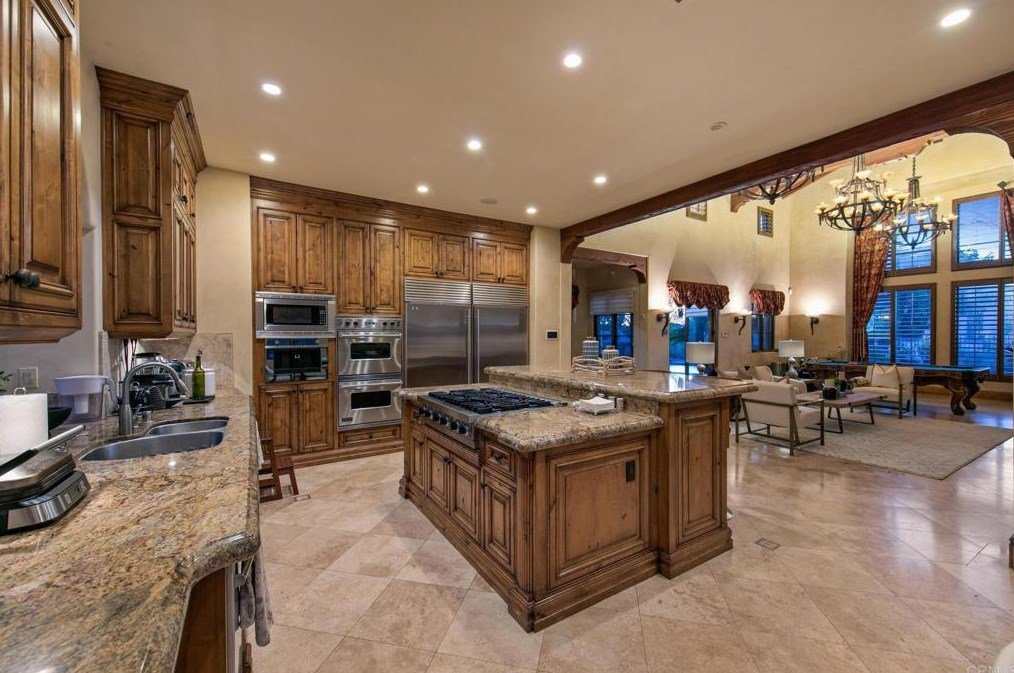
A second courtyard serves as the heart of the home. The dining room, office, and kitchen overlook this intimate outdoor space, which features a fireplace and outdoor seating areas that extend family activities beyond the interior walls.
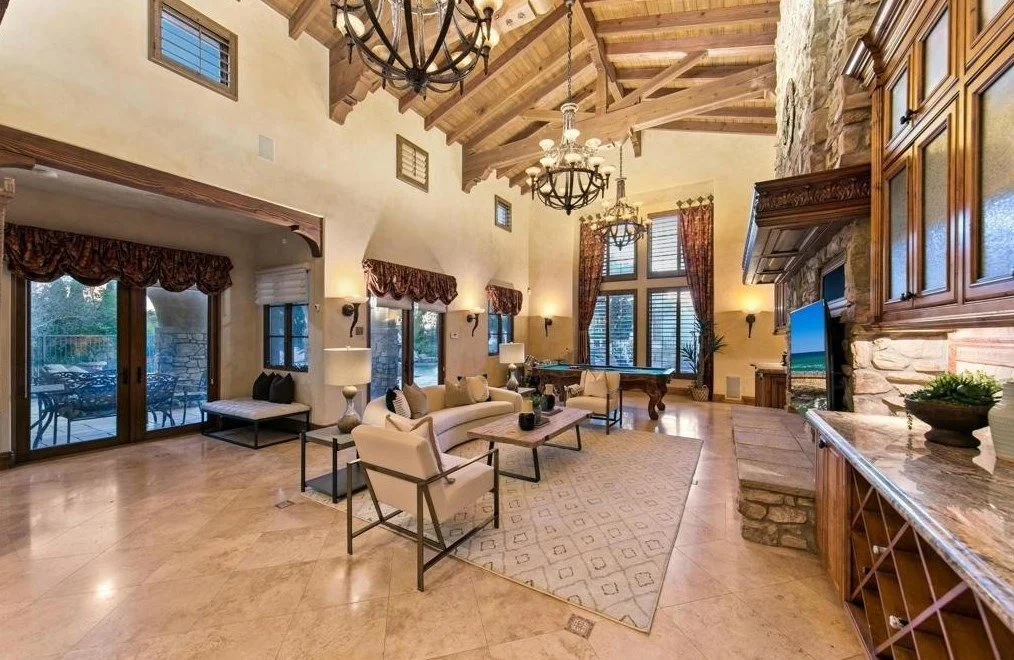
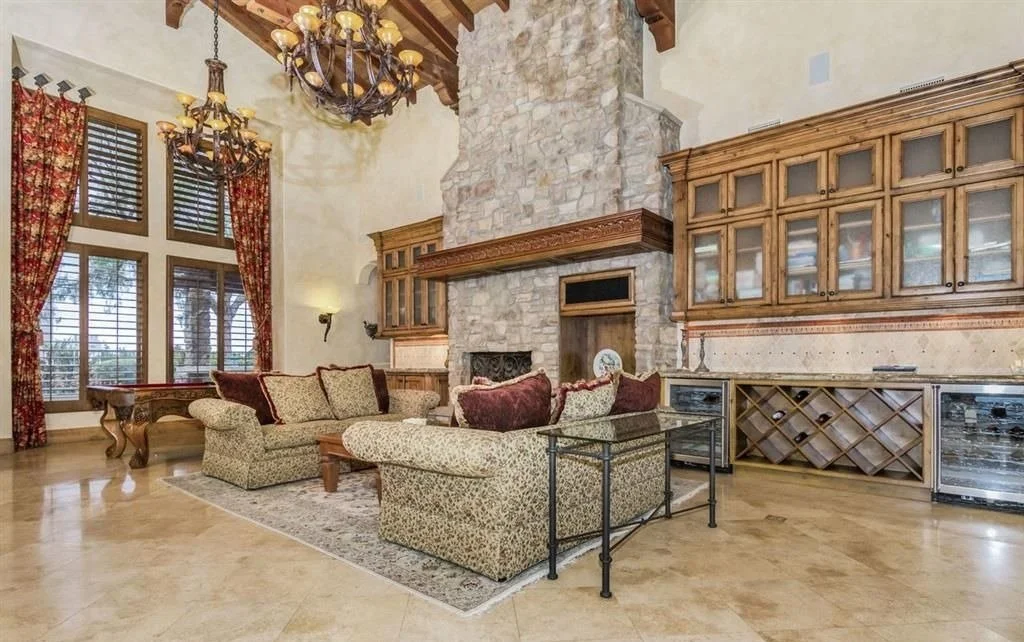
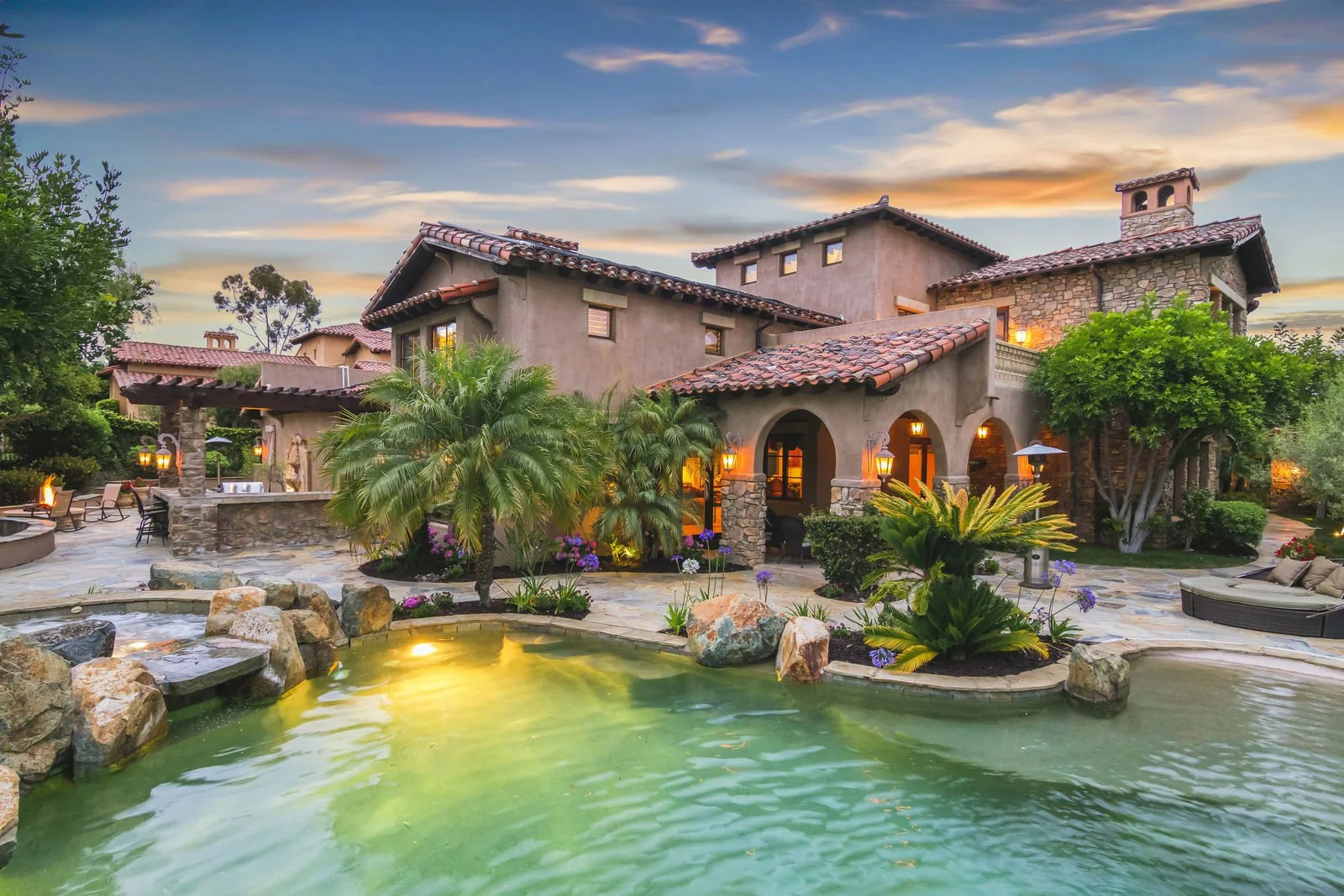
The great room opens toward the rear of the property, where large covered porches overlook the pool and outdoor entertaining spaces. Timbered ceilings and generous openings reinforce the connection between indoor and outdoor living.
A third courtyard organizes the service side of the residence, integrating the three-car garage, mudroom, and kitchen access while maintaining the overall character and cohesion of the estate.
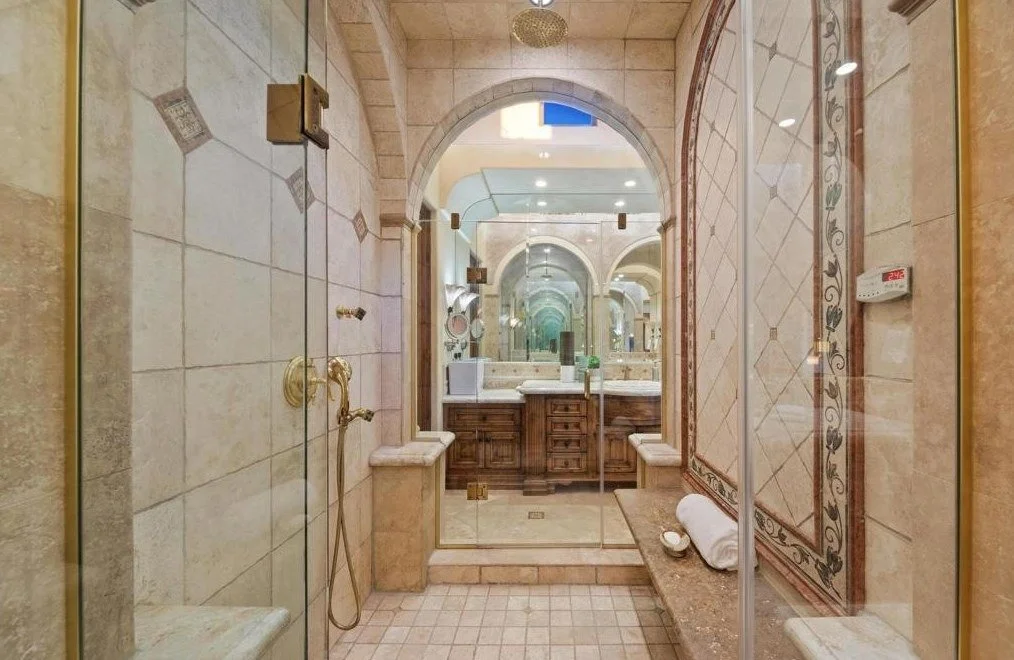
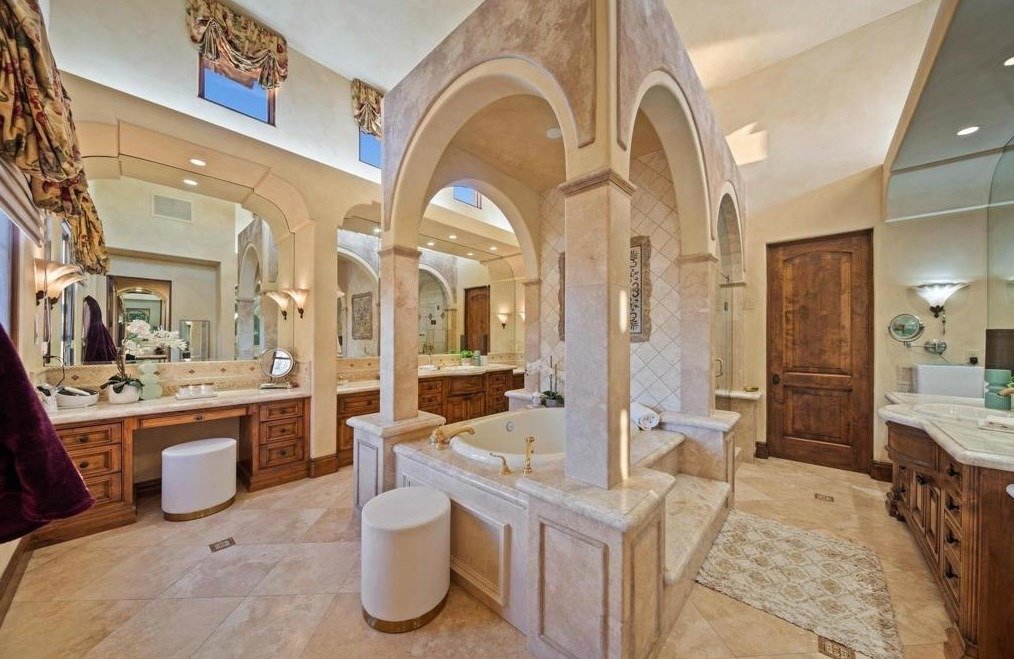
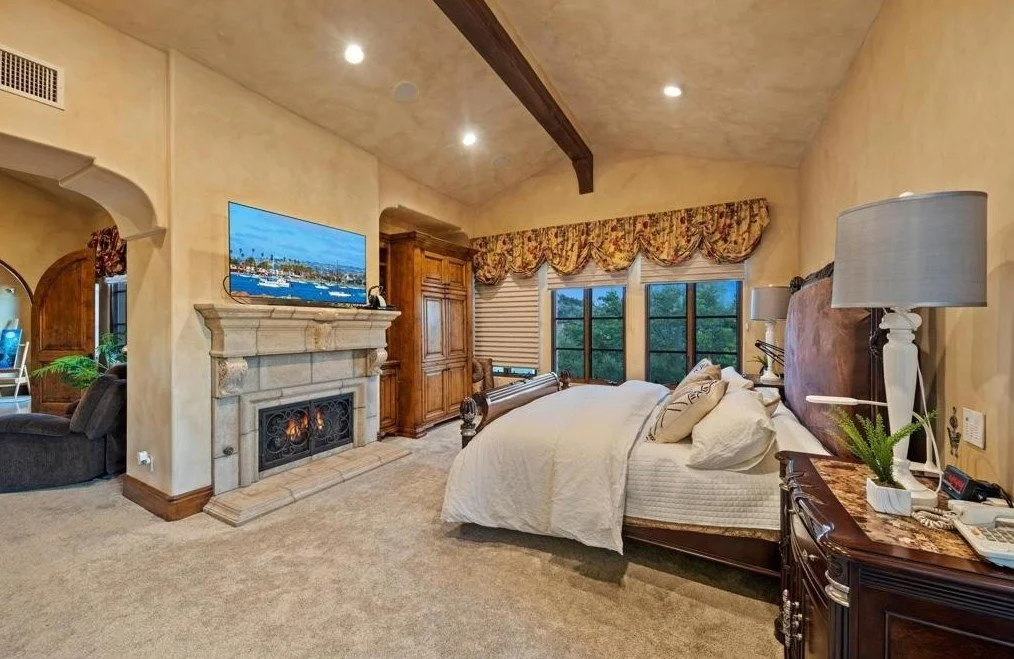
The upper level is divided into distinct family zones. One wing is dedicated to the owners’ suite, complete with a private sitting room and covered porch oriented toward distant views of the Pacific Ocean. The opposite wing contains a playroom and three children’s suites, each with its own bathroom and walk-in closet.
The rear of the property, entirely hidden from public view, contains the pool, outdoor kitchen, and entertainment areas, creating a private retreat for family and guests.
Design Principles in Action
Privacy Through Architecture
Privacy is achieved not through isolation but through careful spatial organization. Courtyards, walls, porches, and building massing work together to create protected outdoor rooms and shield views into the home.
Multigenerational Living
The mother-in-law suite demonstrates how multiple generations can live together while maintaining dignity, independence, and meaningful family connections.
Status Without Excess
The tower and Tuscan-inspired architecture create a memorable presence within the community. The home communicates quality and permanence through thoughtful design rather than unnecessary extravagance.
Hospitality and Comfort
The arrangement of courtyards, porches, and gathering spaces allows the residence to adapt effortlessly between intimate family living and large-scale entertaining.
Indoor-Outdoor Living
Every major living space maintains a visual and physical connection to an outdoor room, reinforcing a lifestyle centered on climate, family interaction, and year-round enjoyment.
Outcome
The design transformed a highly visible corner lot into a private family estate that balances openness and seclusion.
The corner tower established a distinctive identity within the community while the network of courtyards created layers of privacy rarely achieved on a site with such extensive street frontage.
The family gained a home capable of accommodating multiple generations, hosting large gatherings, and supporting everyday family life without compromise. Rather than feeling exposed, the property functions as a collection of intimate indoor and outdoor environments connected through a carefully orchestrated sequence of spaces.
The result is a residence that feels both grand and personal—an estate designed not simply to be admired from the street but to enrich the daily lives of those who live there.
Lessons Learned
This project reinforced the idea that challenging sites often contain the greatest opportunities. What initially appeared to be a difficult corner condition ultimately became one of the defining strengths of the design.
The project also demonstrated that privacy is most effective when it is created by architecture rather than landscaping alone. Courtyards proved to be powerful tools for shaping views, controlling movement, and creating comfortable outdoor living spaces.
The integration of the mother-in-law suite highlighted the value of designing for connection rather than separation. By carefully positioning the suite within the overall composition, the family achieved both independence and togetherness.
Most importantly, the project confirmed that successful luxury homes are not defined by size or extravagance. They are defined by how well they support everyday life, welcome guests, and create a lasting sense of comfort, belonging, and retreat.